
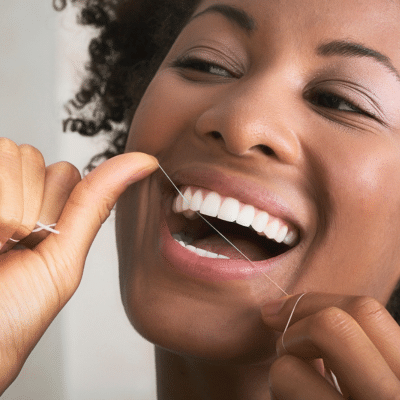
Woman demonstrating proper flossing technique to show how to floss correctly for better oral health.
At Denison Family & Cosmetic Dentistry in Newport News, VA, we focus on preventative dental care, because maintaining a healthy smile begins with daily habits at home. While brushing twice daily is foundational, there’s one simple habit many patients overlook: flossing. Understanding how to floss correctly is crucial, as it protects your teeth and gums from decay and disease.
Why Flossing Matters
Your toothbrush does an excellent job cleaning the broad surfaces of your teeth, but it simply cannot reach the tight spaces between them and just below the gumline. That’s where floss excels. Knowing how to floss correctly allows you to remove food particles and plaque — the sticky film of bacteria that forms after eating — in areas a brush can’t reach. Without proper flossing, plaque can accumulate, harden into tartar and contribute to gum inflammation and tooth decay.
Flossing daily also supports gum health. Plaque trapped between teeth and along the gumline is one of the main causes of gingivitis, the early stage of gum disease. Learning how to floss correctly can prevent gingivitis from progressing to more serious periodontal disease, which may lead to gum recession or tooth loss if untreated.
Flossing and Preventative Care
At Denison Family & Cosmetic Dentistry, we encourage patients to pair daily oral hygiene with regular dental checkups and professional cleanings. During your routine visits, our team removes tartar buildup that brushing and flossing alone cannot eliminate and checks for early signs of disease. Understanding how to floss correctly ensures you’re getting the most out of your daily routine, complementing professional care.
Benefits of Daily Flossing
Daily flossing, done correctly, offers multiple benefits:
- Prevents Gum Disease: By removing plaque where gums meet your teeth, you protect the soft tissue from irritation and inflammation. Knowing how to floss correctly is essential to target these areas effectively.
- Reduces Tooth Decay: Flossing clears debris that could otherwise lead to cavities. Learning how to floss correctly ensures no spots are missed.
- Freshens Breath: Removing trapped food particles reduces the bacteria that contribute to bad breath.
- Enhances Overall Oral Health: Healthy gums support your whole smile, reducing the risk of more extensive dental treatments later. Mastering how to floss correctly is key to maintaining these benefits.
How to Floss Correctly
Even if you floss regularly, technique matters. Follow this step-by-step guide to learn how to floss correctly:
- Use Enough Floss: Cut approximately 18 inches of dental floss for use. Wrap most of it around one middle finger and the rest around the opposite middle finger.
- Be Gentle: Slide the floss between your teeth using a gentle sawing motion. Don’t snap or force it, which could harm your gums. This is an important aspect of how to floss correctly.
- Form a “C” Shape: Curve the floss around each tooth in a C-shape to reach just below the gumline.
- Clean Both Sides: Move the floss up and down against both sides of each tooth to dislodge plaque and food. Properly doing this is essential for how to floss correctly.
- Use a Fresh Section: Unwind a clean section as you move from tooth to tooth to avoid spreading bacteria.
- Don’t Forget Back Teeth: The molars are easy to skip but especially prone to buildup if neglected. Learning how to floss correctly ensures even the hard-to-reach teeth are cleaned.
For patients with braces, bridges, or limited dexterity, alternatives like floss picks, water flossers and interdental brushes are excellent options. Regardless of the tool, understanding how to floss correctly ensures maximum benefits.
Tips to Make Flossing Easier
- Floss before brushing at night — this helps dislodge debris and makes brushing more effective.
- Experiment with different types of floss — waxed, unwaxed, thin, or textured — until you find what works best.
- Use a daily reminder until flossing becomes a natural part of your routine. Mastering how to floss correctly takes practice but pays off in long-term oral health.
Make Flossing Part of Your Routine
Flossing doesn’t need to take long — just a few minutes a day — but the benefits are long-lasting. Paired with regular brushing and dental visits at Denison Family & Cosmetic Dentistry in Newport News, VA, proper flossing provides the strongest protection against cavities, gum disease and other oral health issues. Learning how to floss correctly ensures you maximize your daily oral hygiene routine and keep your smile healthy and bright.
Request Your Appointment in Newport News, VA Today
If you have questions about how to floss correctly or the best tools for your smile, our team in Newport News, VA is here to help. Contact us today to request your next appointment and take the first step toward a healthier smile.

